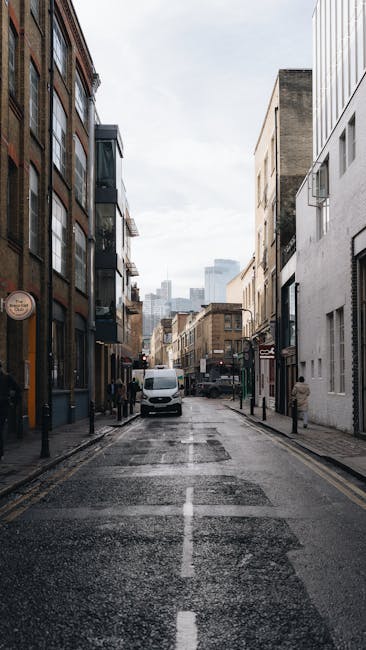
Best van routes near Pimlico Tube (SW1V) for moving day

Moving day around Pimlico can feel simple on paper and a bit fiddly in real life. Narrow streets, busy junctions, resident parking bays, delivery traffic, and the usual London unpredictability all have a way of turning a short van journey into a small logistics puzzle. If you are planning the best van routes near Pimlico Tube (SW1V) for moving day, the goal is not just to get from A to B. It is to keep the move calm, quick, and as stress-free as the area allows. That means choosing sensible roads, planning loading access, thinking about timing, and avoiding the kind of route that looks fine on a map but turns into a nightmare when a large van tries to squeeze through.
This guide breaks down the practical route choices, the local factors that matter most, and the small decisions that can save you a lot of hassle on the day. You will also find a checklist, a comparison table, and a realistic example of how a move near Pimlico Tube usually plays out. Truth be told, the best route is often the one that is boring, predictable, and easy to reverse out of if needed.
Why Best van routes near Pimlico Tube (SW1V) for moving day Matters
Pimlico sits in a part of central London where space is valuable and road layouts can be deceptively awkward. Around the Tube station, you are dealing with residential streets, local traffic, taxis, buses, and the occasional road user who is clearly in a hurry and not especially patient. For a moving van, that mix matters. A route that works for a car may not work for a long-wheelbase van, and a route that looks quick on a sat-nav may send you into a street with tighter turns than you expected.
Why does that matter so much on moving day? Because every unnecessary turn, queue, or awkward manoeuvre adds time, stress, and risk. More time means more chance of blocking traffic or losing your loading space. More stress means more mistakes. And more mistakes usually mean more lifting, more waiting, and more cost. Simple as that.
There is also the matter of your building access. In Pimlico, many properties have shared entrances, basement flats, narrow frontages, or limited space for waiting vans. The best route is the one that gets your vehicle close enough to the door without causing problems for neighbours or making your removal crew carry boxes across half the neighbourhood. Not ideal, to put it mildly.
For anyone planning local removals or a more tailored moving service, route choice is part of the service quality, not an afterthought. Good route planning can make even a busy London move feel organised. Bad route planning can make a small move feel strangely exhausting.
How Best van routes near Pimlico Tube (SW1V) for moving day Works
Van routing near Pimlico Tube is mostly about balancing three things: road size, traffic flow, and access at both ends of the move. You are trying to connect your property to the van parking point using roads that are suitable for the vehicle size, easy enough to navigate, and sensible for loading and unloading.
In practical terms, that usually means looking at:
- streets with enough width for a van to pass without constant stopping
- turns that do not force a multi-point manoeuvre
- routes that avoid unnecessary school-run or commuter congestion
- clear options for pulling in briefly to load or unload
- the least complicated path between your address and the main roads out of the area
The big idea is this: do not treat a moving day route like a straight line on a map. Treat it like a chain of small decisions. If one street is awkward, it can be worth taking a slightly longer path that is much easier for the driver. That is often quicker in the end. A van moving smoothly beats a van doing three-point turns every other minute. No contest.
For moves involving furniture that needs careful handling, you may also want to think about whether furniture storage or temporary holding space would reduce pressure on the day. Sometimes the smartest route is not only about the road outside; it is also about reducing the amount of stuff you need to move in one go.
Key Benefits and Practical Advantages
Good van route planning near Pimlico Tube gives you more than a quicker journey. It improves almost every part of the move.
1. Less wasted time
When a driver knows the best approach, they spend less time circling the area, waiting for a gap, or trying to reverse into a tight corner. That keeps the schedule moving and reduces the feeling that the whole day is slipping away before breakfast.
2. Easier loading and unloading
A sensible route can bring the van closer to the front door, which means shorter carrying distances. That sounds minor until you are carrying a wardrobe, a box of books, or a sofa cushion that keeps sliding off your arm. Then it suddenly feels very important.
3. Lower chance of avoidable damage
Sharp turns, tight bends, and rushed parking increase the chance of bumping kerbs, scraping bodywork, or knocking into something near the property. A more suitable route lowers that risk.
4. Better coordination with helpers
If friends, family, or professional movers are helping, everyone can work to the same plan. They know where the van will stop, what the approach will be, and when the next load should be ready.
5. Less stress for everyone involved
Let's face it, moving day is already a strange blend of excitement and mild chaos. A clear route plan removes one of the biggest unknowns. That alone can make the day feel more manageable.
Expert takeaway: Around Pimlico, a slightly longer route that allows smoother van access is usually better than a shorter route that creates parking problems, awkward turns, or last-minute delays.
Who This Is For and When It Makes Sense
This kind of route planning is useful for a wide range of movers, not just people leaving a flat near the Tube. If you are moving anything larger than a few suitcases, it is worth paying attention.
- Flat movers: especially if you live in a basement, maisonette, or upper-floor property with limited frontage
- First-time movers: people who have not dealt with London loading conditions before
- Families: when the amount of furniture, bags, and boxes makes speed important
- Students: particularly if combining small loads with awkward item timing
- Businesses: office or equipment moves that need a tidy, time-sensitive approach
- Anyone using a van service: if the driver needs a clear handover and a predictable stop point
It also makes sense if your move is happening during a busy period, after work hours, or in bad weather. Wet pavements, poor visibility, and heavier traffic can make even a short local journey a bit more complicated. You do not need perfection. You do need a sensible plan.
For larger moves, it can help to pair route planning with a service that offers full removals support, or with man and van assistance if the job is smaller and more flexible. Different moves, different tools. Sounds obvious, but people do try to force a big move into a tiny schedule far too often.
Step-by-Step Guidance
If you want the move to feel controlled rather than rushed, use a simple route-planning process. Nothing fancy. Just clear steps.
- Confirm the exact collection and delivery points. Do not rely on "near the station" or "by the church." Get the actual street names and building access details.
- Check the vehicle size. A small van and a long-wheelbase van behave very differently in tight London streets.
- Map more than one route. One route may be better for access, another may be better for traffic flow. Keep a backup.
- Look for loading options close to the property. Short carrying distances save time and reduce strain.
- Time the move realistically. If possible, avoid the most congested parts of the day. Early starts can help, though a 7 a.m. handover is not everyone's idea of fun.
- Plan the order of loading. Put the first items you need at the destination in a way that makes sense for unloading.
- Keep essentials separate. Kettle, documents, charger, keys, medication, a change of clothes. The usual suspects.
- Brief the driver or movers. A quick update about road width, access doors, and any restrictions can save a lot of guesswork.
If you are managing a mixed move with items going into temporary storage, it can also help to speak about removals and storage in the same conversation as the route plan. That way, the van journey, the unload point, and the storage handover all work together rather than fighting each other. Tiny detail, big difference.
A simple route-planning mindset
Ask yourself three questions before the day:
- Can the van reach the property without awkward turns?
- Can it stop safely without blocking the street for too long?
- Will the route still work if traffic is heavier than expected?
If the answer to any of those is no, rethink the route. Easy enough, really.
Expert Tips for Better Results
Here is where a bit of real-world judgement helps. The best van routes near Pimlico Tube are rarely the most obvious ones. They are the ones that reduce friction.
Use main roads as the backbone, then shorten the final approach
In central London, it often makes sense to stay on broader roads for as long as possible, then take the final approach through the most practical side street. That keeps the van on easier terrain and reduces the chance of a tight reverse. Drivers usually appreciate that. So do your neighbours.
Avoid creating a "perfect" route that is too fragile
Some people try to design a route that looks mathematically ideal but falls apart the moment a bus stops, a delivery lorry blocks the lane, or somebody double-parks. A route with a little flexibility is often better than a brittle one. Better to have a plan that survives contact with reality.
Think about parking, not just driving
A route is only useful if the van can stop somewhere reasonable at the end. If you cannot park close by, the move becomes slower and more physical. For a lot of Pimlico addresses, that is the real challenge.
Keep communication simple
One person should make the final call on where the van stops. Too many voices in the street can slow everything down. You know the scene: someone waving from the pavement, someone else reading a text message, and nobody quite sure who is in charge. Avoid that if you can.
Build in a little time buffer
Even a short buffer can stop a small delay from becoming a major headache. In moving, time has a funny habit of disappearing just when you need it most. Not dramatic, just true.
Consider storage if access is tight
If the property has restricted access or the timing is awkward, short-term storage can smooth the process. It lets you split the move into manageable stages rather than forcing everything through one narrow window. For some households, that is the difference between a controlled day and a very long one. If that sounds relevant, options like short-term storage or secure storage may be worth considering.
Common Mistakes to Avoid
Most moving-day problems near Pimlico Tube are not caused by huge disasters. They are caused by small, preventable oversights. Here are the ones that crop up again and again.
- Choosing the fastest route on paper instead of the easiest route in practice. The map does not care about kerb space.
- Ignoring vehicle size. A route that works for a car may be miserable for a van.
- Not checking for access restrictions. Even temporary obstructions can throw the plan.
- Leaving packing too late. The van arrives, and the boxes are still half-open. Not great.
- Forgetting the unloading side. Some people plan the departure beautifully and then realise the destination is even more awkward.
- Assuming someone else will sort parking. On a busy day, assumptions cost time.
- Overloading the schedule. Moving day always seems to have one extra job hiding in the corner.
One practical example: if you are moving out of a flat and need a van to wait nearby, do not count on "there will probably be space." In central London, probably is not a plan. A better plan is to identify a safe, sensible stop point in advance and know what you will do if that point is occupied. That one habit can save the whole day from wobbling.
Tools, Resources and Recommendations
You do not need complicated systems. A few basic tools can make route planning far easier.
- Offline maps on your phone: helpful if signal gets patchy or you are under pressure and do not want a dead battery to ruin your day
- Written move notes: keep the address, key contacts, flat number, and access instructions in one place
- Room labels: make unloading faster and reduce confusion at the destination
- Measuring tape: useful if you are unsure whether a sofa, mattress, or cabinet will clear a doorway
- Protective materials: blankets, covers, or wraps to keep items safe during loading and transit
- Removal boxes and packing materials: properly packed items are easier to stack, carry, and unload
If you need help preparing the contents rather than just the journey, a service such as packing services can be a surprisingly good investment. Careful packing often makes route planning easier too, because the loading order becomes clearer and the van can be packed more efficiently.
You may also want to review your provider's practical policies on insurance and safety, especially if you are moving valuable, fragile, or bulky items. Peace of mind matters on moving day. Nobody wants to be worrying about a scratched table while also trying to find the front door key.
Law, Compliance, Standards, or Best Practice
For moves near Pimlico Tube, the main compliance issues usually relate to parking, loading, safe vehicle operation, and considerate use of public space. Exact rules can vary depending on the street, local restrictions, and the type of vehicle being used, so it is sensible to verify the situation before moving day rather than assuming everything is fine.
Best practice usually includes:
- not blocking access for pedestrians, neighbours, or emergency services
- keeping loading time as short as practical
- parking only where the vehicle can do so safely and lawfully
- protecting property and common areas during lifting and carrying
- communicating clearly with all helpers so nobody is improvising in the middle of the road
If you are using a professional mover, you should also expect them to work in line with basic health and safety practice. That includes sensible manual handling, secure stacking, and care around entrances, stairs, and shared spaces. A good operator should be careful without being overcomplicated about it. Calm, efficient, and not dramatic. That is usually what you want.
It is also worth checking company policies on payment, cancellation, and complaints before you book. A move is stressful enough without fuzzy terms. Clear expectations tend to save everyone time.
For more background on operational standards and customer expectations, you can review the company's own health and safety policy, terms and conditions, and pricing and quotes information. Those pages are useful when you want the practical details spelled out before moving day arrives.
Options, Methods, or Comparison Table
Different moves call for different route approaches. Here is a simple comparison to help you decide what fits your situation.
| Approach | Best for | Pros | Watch-outs |
|---|---|---|---|
| Main-road-first routing | Most standard van moves | Predictable, easier for larger vans, fewer tight surprises | May take slightly longer in distance |
| Shortest-path routing | Very small loads or experienced drivers | Can be quick if access is simple | Often risky in tight streets and harder to park |
| Two-step approach with a nearby stop | Flats, awkward loading, busy times | Flexible and reduces stress at the door | Needs good coordination and may involve a short carry |
| Storage-assisted move | Staggered moves or limited access | Reduces pressure, lets you split the job | Requires extra handling and planning |
For many Pimlico moves, the two-step approach is quietly the best. The van does not need to sit right outside the door if a nearby, sensible stop point works better. And if you are moving a few items rather than an entire household, small removals can be a more realistic fit than a full-scale van plan.
People sometimes ask whether a bigger van is always better. Not really. A larger van can reduce trips, but it can also be harder to place near tight streets and more awkward to manoeuvre. The right vehicle is the one that matches both the load and the local access. That sounds almost too obvious, yet it is often the bit people overlook.
Case Study or Real-World Example
Imagine a couple moving out of a top-floor flat in SW1V with a sofa, a few flat-pack pieces, several boxes, and a mattress. Their first instinct is to send the van down the nearest short road because it looks quicker on the map. But that road has limited stopping space and turns tighter than expected. A better plan is to approach via broader roads, stop at the nearest practical point, and keep the carry distance manageable rather than forcing the van into an awkward position.
What happens in practice? The movers arrive a little earlier than the busiest window, unload the heaviest items first, and avoid waiting for space that may never appear. The driver can then reposition if needed, but the key point is that the schedule stays under control. A small amount of planning prevents a lot of shuffling about. You can almost hear the relief in the stairwell when the first load is done properly.
In another situation, a student move from a shared flat may be better handled with a smaller van and a very direct route, because the load is light and the risk of blocking the street for too long is low. Different move, different answer. There is no one magic route, despite what some people hope while scrolling maps at midnight.
Practical Checklist
Use this checklist the day before and on the morning of your move.
- Confirm both postcodes and exact building entrances
- Check the vehicle size and height if relevant
- Identify the primary route and one backup route
- Note any narrow streets, one-way sections, or awkward turns
- Make sure the loading area is clear and realistic
- Prepare parking or stopping instructions for the driver
- Pack essentials separately
- Protect furniture and fragile items
- Keep keys, documents, and phone chargers accessible
- Share the plan with everyone helping on the day
- Check weather and allow a little extra time if conditions look poor
- Review any storage handover or second-trip arrangements
A simple checklist is boring in the best possible way. It reduces mistakes. And on moving day, boring is good.
Conclusion
The best van routes near Pimlico Tube (SW1V) for moving day are the ones that fit the reality of local streets, vehicle size, loading access, and timing. A route that looks perfect on a screen is not always the route that works in a narrow London neighbourhood. What you want is a plan that keeps the van moving, the loading efficient, and the stress under control.
If you remember nothing else, remember this: choose the route that makes the physical move easier, not just the map shorter. That mindset tends to produce fewer delays, fewer awkward manoeuvres, and a much calmer day overall. And honestly, that calm is worth a lot.
Get a free quote today and see how much you can save.
When the boxes are stacked, the van is loaded, and the last key has been found, a good route will have done more than save time. It will have helped the whole day feel manageable, which is a pretty good result in central London.
Frequently Asked Questions
What is the best van route near Pimlico Tube for moving day?
The best route is usually the one that balances road width, access, and stopping space rather than simply the shortest distance. In practice, that often means using broader roads for most of the journey and only turning into tighter streets for the final approach.
Should I choose the fastest route or the easiest route?
Most of the time, the easiest route wins. A route that is slightly longer but simpler for the driver is often quicker overall because it reduces stopping, reversing, and uncertainty around parking.
What size van is best for moving in Pimlico?
That depends on the amount of furniture, the height of the property, and how tight the access is. Smaller vans can be easier to place near the building, while larger vans may reduce trips if there is enough room to manoeuvre safely.
How early should I plan the route before moving day?
Ideally, plan it at least a few days ahead. That gives you time to check access, confirm parking options, and make a backup plan if the first route looks awkward.
Do I need storage if access near the Tube is difficult?
Not always, but storage can help if the move is split into stages or if loading and unloading timing is awkward. Short-term or secure storage is especially useful when you cannot get everything into the new place in one go.
Is it better to use a man and van or a full removals service?
For smaller or simpler loads, a man and van service can be a good fit. For larger homes, bulky furniture, or more complicated access, a fuller removals service may be more practical and less stressful.
What if the van cannot stop right outside my property?
That is common in London. The key is to identify the nearest safe, legal stopping point and keep the carry distance as short as you reasonably can. Planning this in advance is much better than improvising on the day.
Are there common mistakes people make around Pimlico moves?
Yes. The biggest ones are underestimating street width, ignoring vehicle size, leaving packing too late, and not planning where the van will stop. Small mistakes, big consequences. That is the annoying bit.
Can packing services help with route planning?
Indirectly, yes. Good packing makes loading faster and more organised, which can reduce the time the van needs to spend parked or waiting. It also makes the move feel more controlled overall.
Should I check insurance before moving?
Yes, especially if you are moving valuable or fragile items. It is sensible to understand what is covered and how the provider handles safety and responsibility before the day begins.
What should I do if traffic is worse than expected?
Allow a buffer in your schedule and keep a backup route in mind. The best moving-day plans have a little flexibility built in, so one delay does not throw off the entire move.
Where can I find more details about services and policies?
It helps to review the provider's information on removals, storage, packing support, safety, and pricing before booking. That way, you know what to expect and can plan the move with fewer surprises.